

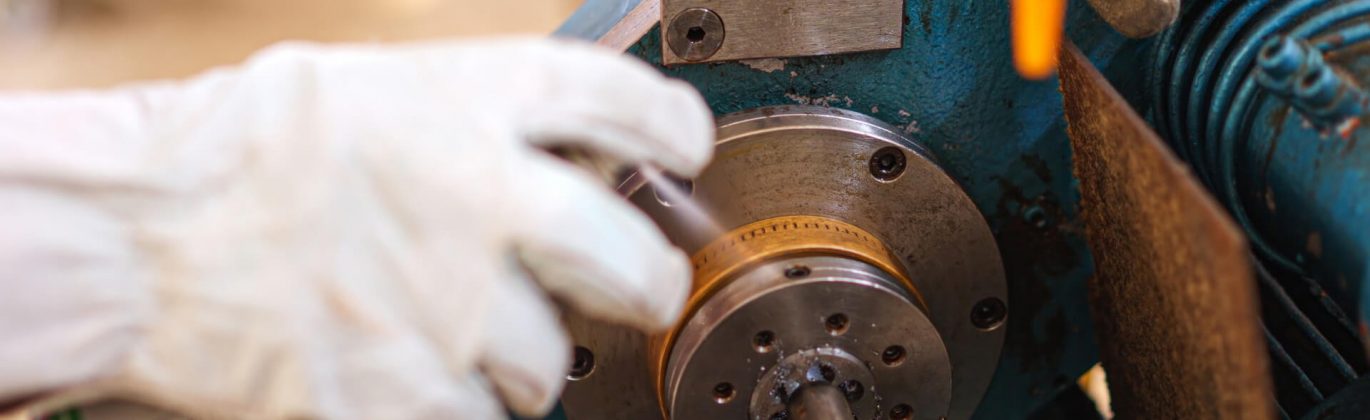
Heavy equipment usually gives you some warning before a part fails completely, so knowing where to look can help you catch the problem earlier.
Wear often shows up first on high-contact surfaces, around welds, at bolt holes, and anywhere material keeps hitting the same area.
At Thompson Repairs, those patterns help us understand whether the part needs a straightforward repair or whether something should change to keep the failure from coming back. In this article, we’ll cover the most common wear points, the early signs to watch for, and how to reinforce them before they become a bigger problem.
Check the High-Wear Areas
On chutes, buckets, gates, guides, and other parts that handle moving material, start by checking the areas that take the most contact.
Look for:
- Metal that is getting thinner
- Polished or grooved surfaces
- One face or corner wearing faster than the rest
- Material repeatedly hitting the same spot
If the wear is concentrated in one area, the whole part may not need to be made heavier. A wear liner, harder surface, or extra thickness only where the contact happens may be enough.
Check Welds for Early Cracking
Small cracks around a weld can be an early sign that the joint is under too much stress. Look for:
- Hairline cracks near the edge of the weld
- Cracks around brackets, mounts, or supports
- Areas that flex under repeated load
- The same crack returning after a previous repair
If the same area keeps cracking, the problem may be coming from more than the weld itself. It can be a sign that the load is concentrating in that area.
A gusset may add support, or the shape of the component may need to change so the load is spread across a larger area.
Check Bolt Holes for Movement
Wear around a bolt hole is often a sign that the connection has started to move. You may notice the hole becoming oval, hardware loosening more often, or one side wearing faster than the other.
Once the metal around the hole starts to wear, replacing the bolt may only help for a while. Rebuilding or reinforcing the area, changing the thickness, or adjusting the design may help the connection carry the load more evenly.
Add Strength Where It Matters
More material is not always the answer. Thicker plate can help where the wear is happening, but adding it across the whole part may only increase weight and cost without fixing the real problem.
At Thompson Repairs, we focus on where the wear or damage starts and what would actually help there. With custom metal fabrication, that might mean adding a wear plate, reinforcing a bracket, changing the thickness in one section, or building a replacement that better fits the way the equipment is being used.
If the same area continues to fail, our AutoCAD and reverse-engineering capabilities can also help us determine whether the part itself should change. A small adjustment to a bend, support, or connection point may be enough to spread the load more evenly and reduce stress on that area.
Track the Failure and Send Us What You See
Before the part gets repaired, take a few photos of the damage and note where it started, how long the part had been in service, and whether you have seen the same problem before. Those details give us a better picture of what is happening and whether the failure has been repeating over time.
If the same bolt hole keeps stretching, the same weld keeps cracking, or the same surface keeps wearing thin, that history can help us understand what needs to change.
Our guide on accurate measurements and repair evaluations explains why those details matter when planning a repair.
At Thompson Repairs, we want to understand not just what failed, but why it keeps failing.
Send photos of your recurring failure point to Thompson Repairs, or call us at (904) 384-5175 to discuss what keeps failing.