

When an industrial part is worn out, damaged, or no longer available from the original manufacturer, custom fabrication may be the best way forward. But if you have never ordered a custom-built component before, you may not know what happens after the first call.
Do you need an original drawing? Will the equipment have to be shut down while the new part is made? How does a fabricator make sure the replacement will actually fit?
The process is more straightforward than it may seem. It starts with understanding the equipment you have today, what the part needs to do, and how it operates.
Here is what you can expect from measurement through installation:
1. Measure the Equipment as It Exists Today
The first step is measuring the actual equipment in the field.
Even if an original drawing exists, equipment that has been in service for years may no longer match it exactly. Parts wear, mounting points change, repairs are made, and equipment may be modified over time.
That is why measurements are taken from the actual opening, mounting points, clearances, and surrounding components.
This is also an opportunity to look at how the existing part is failing. Cracking, bending, corrosion, excessive wear, or repeated repairs can provide important information about what the replacement will need to handle.
Rather than designing around what the equipment looked like years ago, the goal is to build around what is actually there today.
2. Build the Design Around the Application
Once the measurements are collected, they are translated into a build-ready design.
At Thompson Repairs, AutoCAD integration allows the team to design, draft, and refine parts and assemblies before material is cut.
The design considers more than dimensions. It also needs to account for the load the component carries, how frequently it cycles, available clearances, mounting requirements, and the way it interacts with the rest of the equipment.
A component that supports a constant load, for example, may have different requirements from one that repeatedly opens, closes, lifts, or moves throughout the day.
Working through these details before fabrication begins helps create a clear plan for the shop and reduces guesswork later.
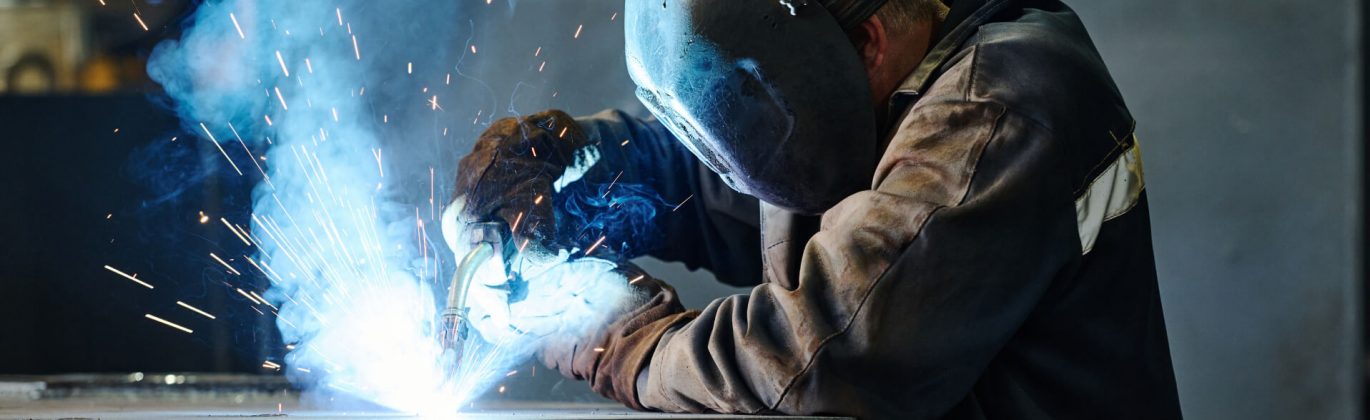
3. Cut, Form, and Weld the Component
Once the design is ready, the project moves into custom metal fabrication.
Plate steel or another selected material is cut to the required dimensions and then formed, bent, welded, and assembled according to the design.
Depending on the application, the build may include reinforcement, brackets, mounting points, structural members, or several fabricated pieces that work together as one assembly.
The objective is not simply to copy the appearance of the old part. It is to create a component with the dimensions, strength, and configuration needed for the real application.
4. Prepare It for the Environment
The last weld does not necessarily mean the component is ready to go into service.
Surface preparation and finishing need to match the environment where the part will operate.
A component exposed to moisture, chemicals, abrasive material, outdoor conditions, heat, or heavy industrial use may require a different approach than one used in a protected indoor setting.
Considering those conditions during the fabrication process helps ensure the finished component is prepared for where and how it will actually be used.
5. Fit, Install, and Test
The final stage happens at the equipment.
The new component is fitted into place so mounting points, connections, clearances, and surrounding equipment can be checked. After installation, the equipment can be cycled through its normal movement or operation to confirm that the component fits and functions as intended.
This brings the process back to where it started: the actual equipment.
By beginning with accurate field measurements and ending with fit-up and testing, the fabrication process is built around the real application rather than assumptions.
What Happens While the Part Is Being Fabricated?
A common concern is whether the equipment will need to be out of service while the new part is being built.
In many cases, it does not. Measurements and design can be handled first, and fabrication can take place in the shop while the plant keeps running. Once the new component is ready, installation can be scheduled during a planned maintenance window or another time that works with production.
This is why it pays to start the process before a worn part reaches the point of failure. There is much more flexibility when you can plan the work instead of dealing with an unexpected breakdown and emergency shutdown.
What If There Is No OEM Drawing?
You can still start the conversation.
Older equipment may no longer have usable drawings, the manufacturer may no longer support the machine, or replacement parts may simply be unavailable.
In those situations, the existing component and equipment can often become the starting point.
Through field measurements and reverse engineering, a new design can be developed around the actual dimensions, mounting requirements, loads, clearances, and operating conditions. For components requiring tighter tolerances or additional manufacturing processes, precision machining may also be part of the solution.
An OEM drawing can be helpful, but not having one does not automatically mean the part cannot be replaced.
What Should You Have Ready Before the First Call?
You do not need a complete engineering package to start discussing a custom build. If possible, gather:
- Photos of the part and surrounding equipment
- Rough dimensions
- A description of how the existing part is failing
- Information about the load it handles
- How frequently it cycles or moves
- Mounting points and clearance constraints
- Details about heat, moisture, chemicals, abrasion, weather, or other operating conditions
Do not worry if you cannot answer everything. The first conversation is about understanding the problem and identifying what information is needed next.
Start Scoping Your Custom Build
Custom fabrication does not have to begin with a finished drawing or a failed machine. Starting earlier gives you more time to measure, design, build, and coordinate installation around your operation.
Have a part that needs to be replaced, recreated, or built specifically for your equipment? Reach out to Thompson Repairs to start scoping your custom build.