

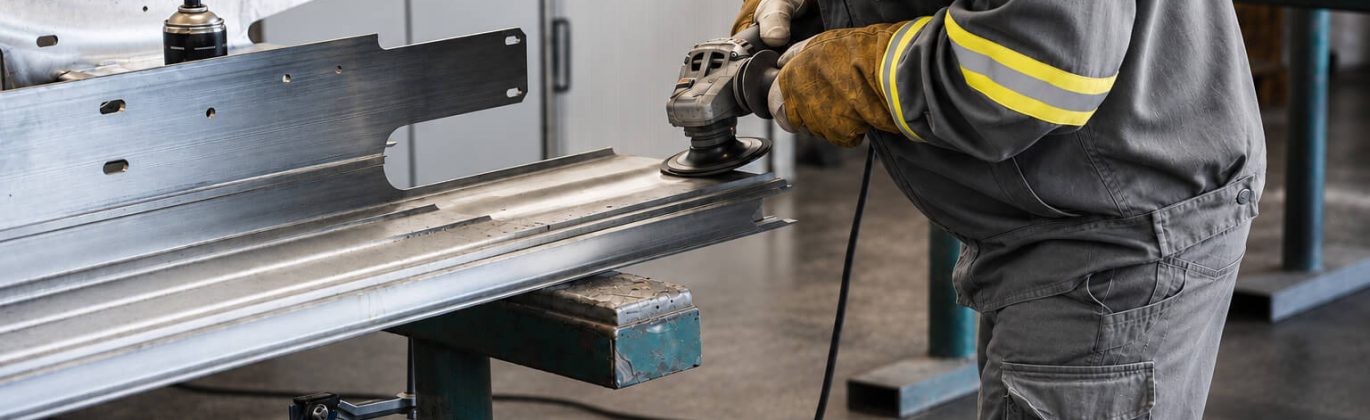
Choosing the right material is one of the most important decisions in any custom fabrication project.
The metal you choose affects how much weight the finished build can support, how well it handles moisture or chemicals, how easy it is to move, and how much it will cost to produce and maintain.
For maintenance and operations managers, the goal is not to choose the strongest or most expensive material. It is to choose the one that best fits the way the finished build will actually be used.
Most material decisions come down to five factors: strength, corrosion resistance, weight, weldability, and cost.
1. How Much Strength Does the Build Need?
Start by looking at the load. Will the finished build support heavy equipment? Will it experience daily impact, vibration, or repeated use? Platforms, frames, guards, containers, and structural components often need a material that can handle demanding conditions without bending or failing.
The material itself is only part of the answer. Thickness, shape, reinforcement, connection points, and overall design also affect strength.
That is why material selection should be considered during the design process rather than after the plans are already complete.
2. What Will the Material Be Exposed To?
The operating environment plays a major role in material selection.
A component used inside a dry warehouse will face very different conditions from one installed outdoors, near saltwater, or in an area that is regularly washed with water or chemicals.
Moisture, humidity, salt, cleaning products, and chemicals can all speed up corrosion. Paint and other protective finishes can help, but the base material still needs to be appropriate for the environment.
Choosing a material without considering exposure can lead to rust, added maintenance, and premature replacement.
3. Does Weight Matter?
Some builds need to be strong and stationary. Others need to be moved, lifted, removed, or transported regularly.
Weight can affect:
- Installation
- Transportation
- Worker handling
- Equipment capacity
- Day-to-day usability
A lighter material can make sense for carts, covers, removable guards, and mobile assemblies. However, reducing weight should never come at the expense of the strength or stability the application requires.
4. How Will the Material Be Welded?
Different metals behave differently during fabrication.
Carbon steel is generally easy to cut, shape, and weld. Stainless steel and aluminum require more control over preparation, heat, filler materials, and welding technique.
Even the right material can fail if the joints are poorly designed or welded incorrectly.
Thompson Repairs uses MIG, TIG, and stick welding, allowing the welding process to be selected based on the material and the needs of the build.
5. What Is the Real Cost?
Material price matters, but it is not the only cost to consider.
The full cost of a custom build may also include:
- Fabrication time
- Finishing or coatings
- Installation
- Ongoing maintenance
- Repairs
- Replacement
A more expensive material may save money if it lasts longer in a harsh environment. On the other hand, using stainless steel in a dry area where coated carbon steel would perform well may add cost without providing a practical benefit.
The best choice balances upfront cost with long-term performance.
When Carbon Steel Is the Best Choice
Carbon steel is often the right material for heavy-duty and structural applications.
It provides strong performance, is widely available, and is generally cost-effective to cut, machine, and weld.
Carbon steel is commonly used for:
- Equipment frames
- Platforms and supports
- Protective guards
- Industrial carts
- Containers
- Material-handling components
Its main weakness is corrosion. If the build will be exposed to moisture, humidity, or outdoor conditions, carbon steel usually needs paint, powder coating, galvanizing, or another protective finish.
When Stainless Steel Is the Best Choice
Stainless steel is often used when corrosion resistance and cleanliness are priorities.
It performs well in wet environments and in areas that require regular washing or exposure to cleaning products.
Common applications include:
- Washdown areas
- Food and beverage facilities
- Chemical-processing environments
- Coastal locations
- Tanks, trays, tables, and enclosures
Stainless steel typically costs more than carbon steel and requires proper welding and handling. It makes the most sense when the operating environment truly requires its corrosion-resistant properties.
When Aluminum Is the Best Choice
Aluminum is a strong option when keeping weight down is more important than achieving maximum structural strength.
It is much lighter than steel and naturally resists corrosion, making it useful for parts that need to be moved or handled regularly.
Aluminum may be used for:
- Lightweight frames
- Mobile carts
- Access panels
- Covers
- Removable guards
- Portable equipment components
Because aluminum does not handle impact, heat, and concentrated loads the same way steel does, the design may require different dimensions or reinforcement.
It also requires specialized welding preparation and techniques.
What Happens When the Wrong Material Is Chosen?
A poor material choice may not cause a problem immediately. The consequences often become clear after the build has been in use for some time.
The wrong material can lead to:
- Premature corrosion or failure
- Frequent repairs
- Unnecessary weight
- Difficulty moving or installing the build
- Higher replacement costs
- Money spent on performance that was not needed
For example, a material without enough corrosion resistance may rust quickly in a washdown area. A material that is too light may bend under repeated loading. A build made from heavy carbon steel may become difficult to move when aluminum would have been a better fit.
Over-specifying a material can also waste budget. More expensive does not always mean better for the application.
Choose the Material Based on the Complete Build
Thompson Repairs has completed custom builds using carbon steel, stainless steel, and aluminum. Each material serves a different purpose depending on the load, environment, weight, fabrication requirements, and budget.
Through custom metal fabrication, AutoCAD integration, and precision machining, our team considers how every material decision affects the finished build.
The right material should provide the performance you need without adding unnecessary weight, maintenance, or cost.
Talk With Our Team About Your Next Custom Build
The more your fabricator knows about the load, environment, cleaning requirements, installation, and daily use, the easier it is to recommend the right material.
Talk with our team about the right material for your next custom build.